

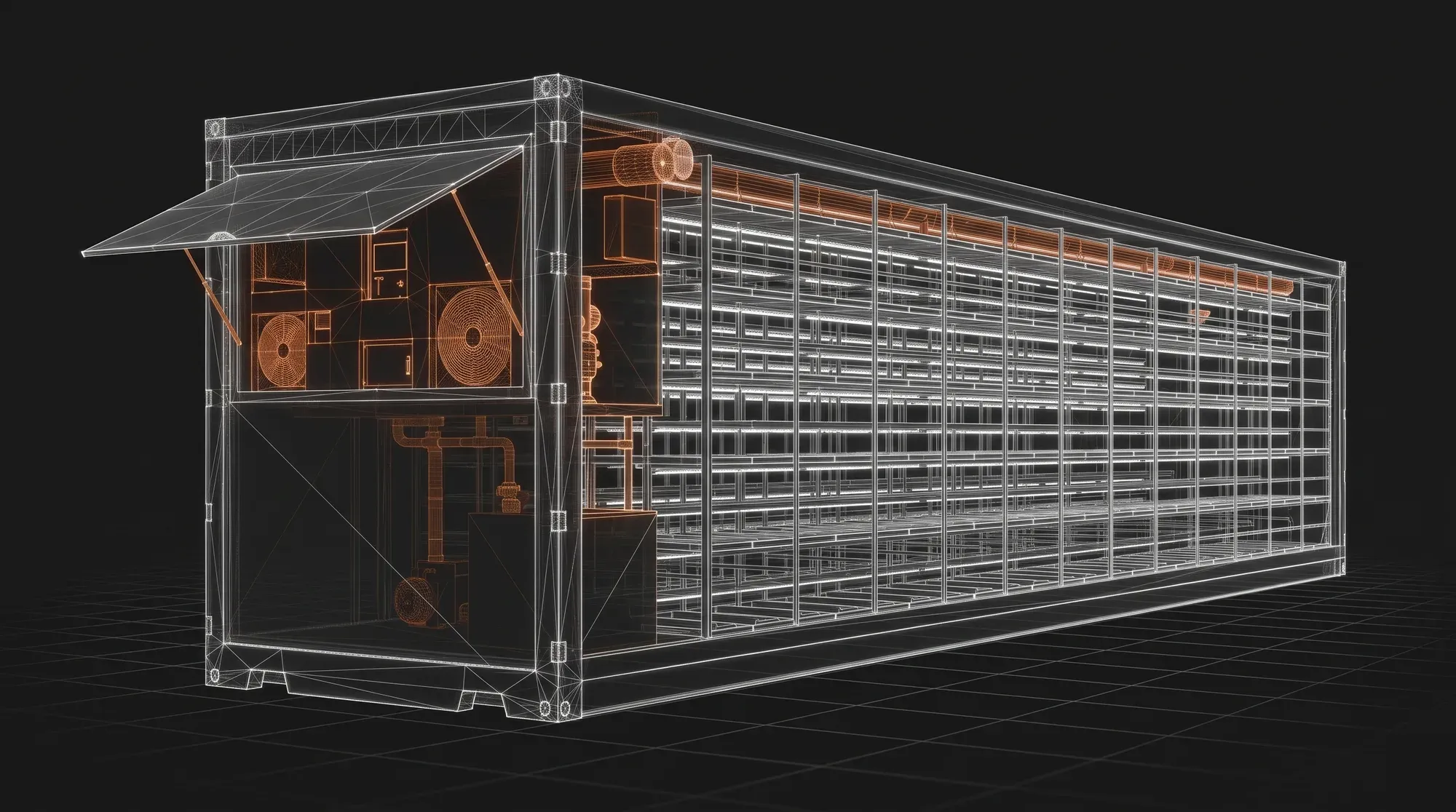
The systems
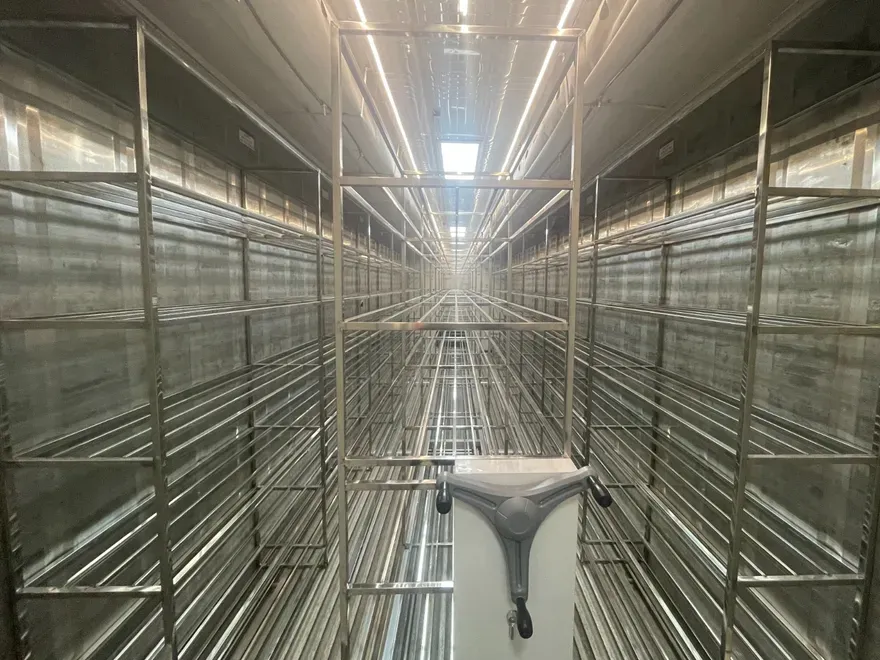
Insulated container shell
A 40-foot high-cube refrigerated container with polyurethane insulation in the walls, roof and doors, up to about 4 in (10 cm) thick. Stainless steel inside walls and a T-section aluminum floor that drains fast and hoses clean.
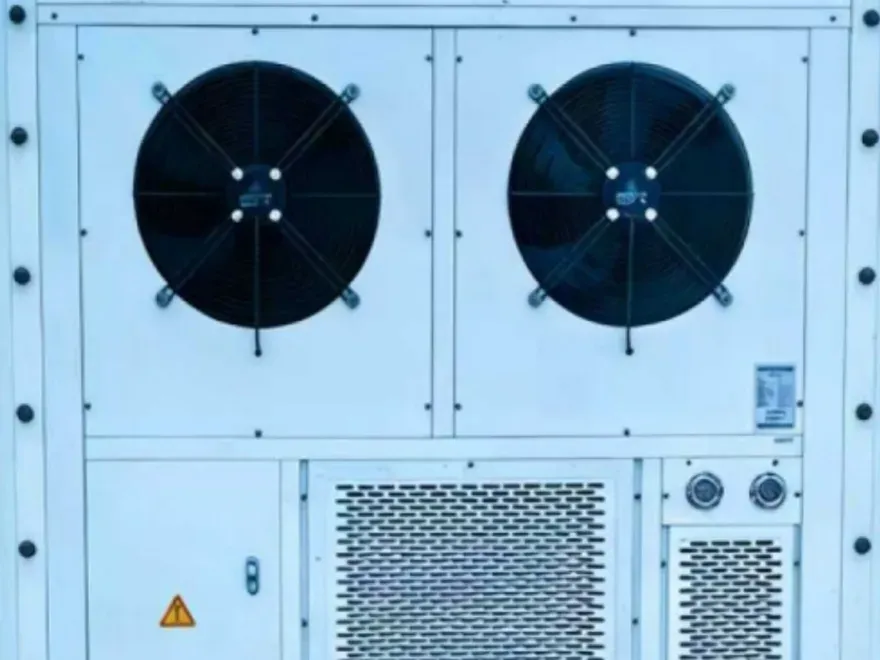
Heat-pump climate unit
One built-in unit both cools and heats, with a DC inverter compressor that speeds up and slows down instead of cycling hard. It is rated to run in outdoor temperatures from −22°F to 113°F (−30°C to 45°C).
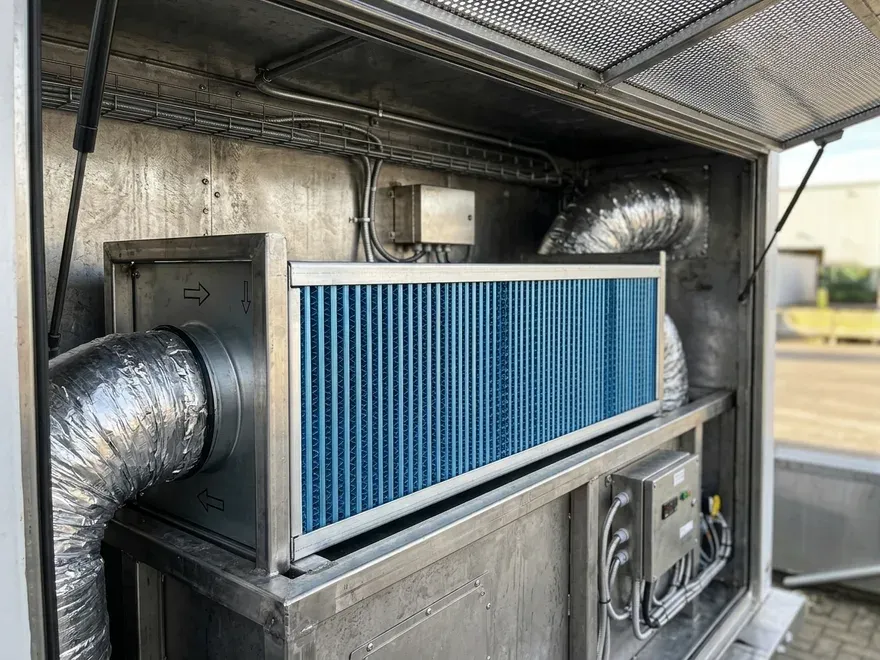
Fresh air and CO₂
Growing mushrooms breathe out CO₂. The pod measures it and brings in fresh air through an all-aluminum heat-recovery core, so incoming air is tempered by outgoing air and the room keeps its temperature.
Gentle air distribution
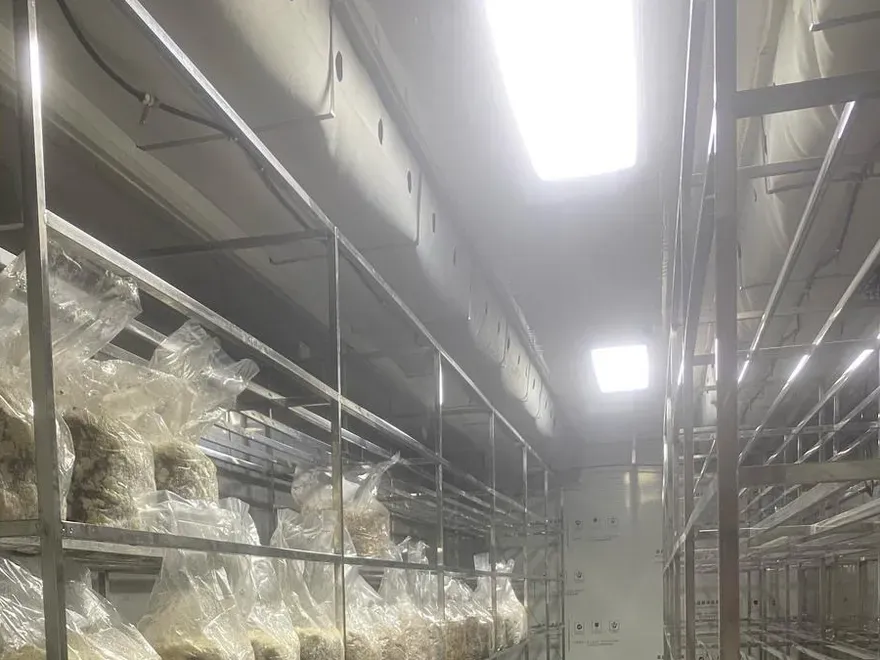
Fabric air ducts spread air evenly along the room so no rack sits in a direct blast. A high-pressure jet layout is available where easier cleaning matters more.
Humidity
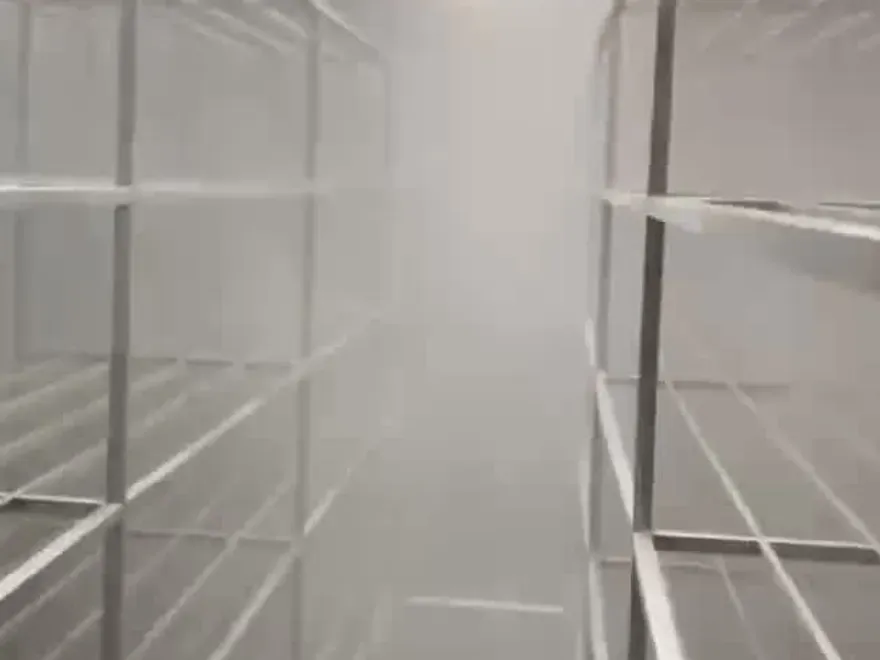
High-pressure fine-mist nozzles hold the room damp. Ultrasonic or spinning-disc humidifiers can be fitted instead, depending on what the variety needs.
Two-color LED lighting
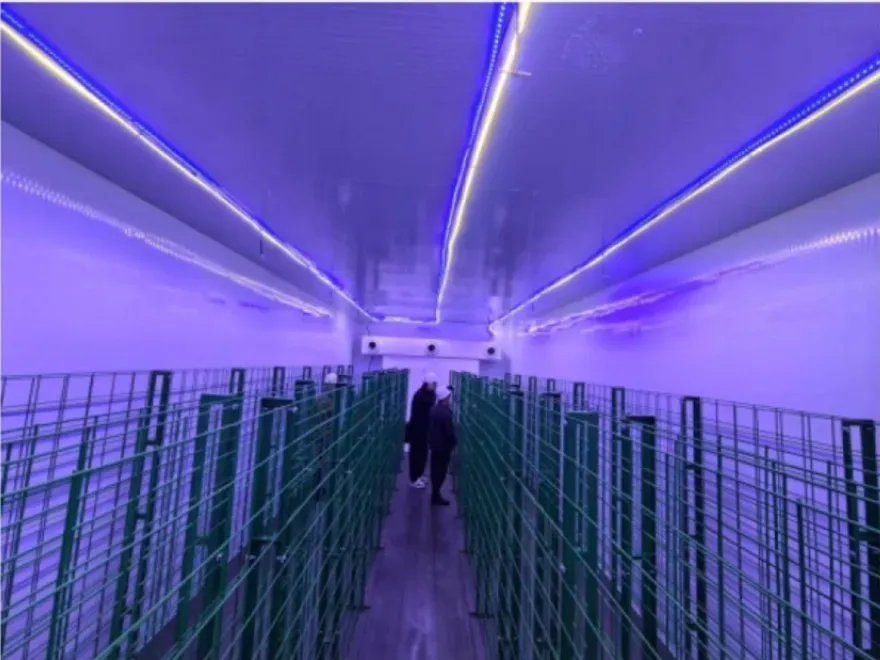
Mushrooms need a little light to form properly. LED strips switch on and off automatically by growth stage.
Vertical racks
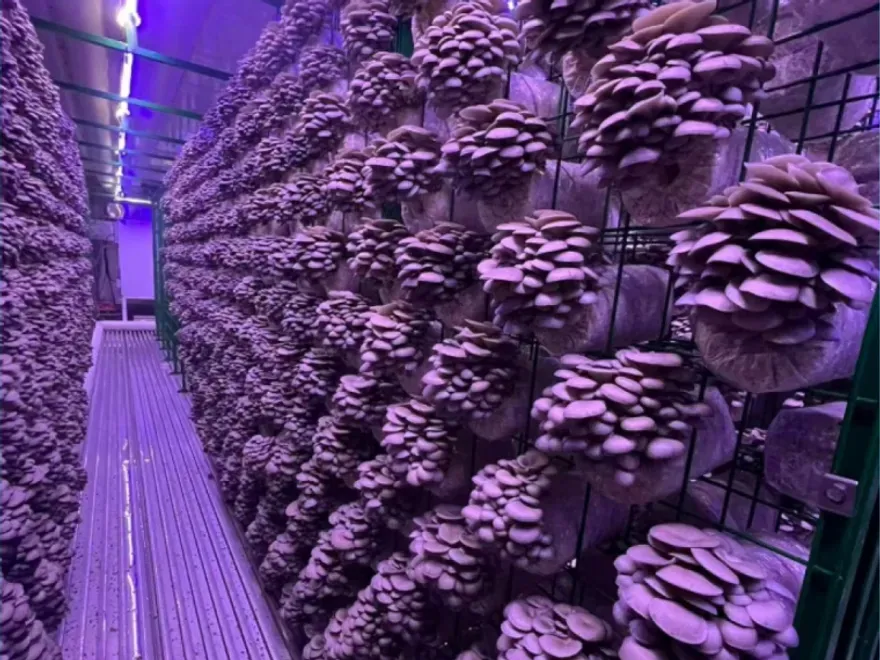
A built-in steel mesh frame holds grow bags stacked from floor to ceiling, with a center aisle. For oyster mushrooms that is about 5,000 bags in one pod.
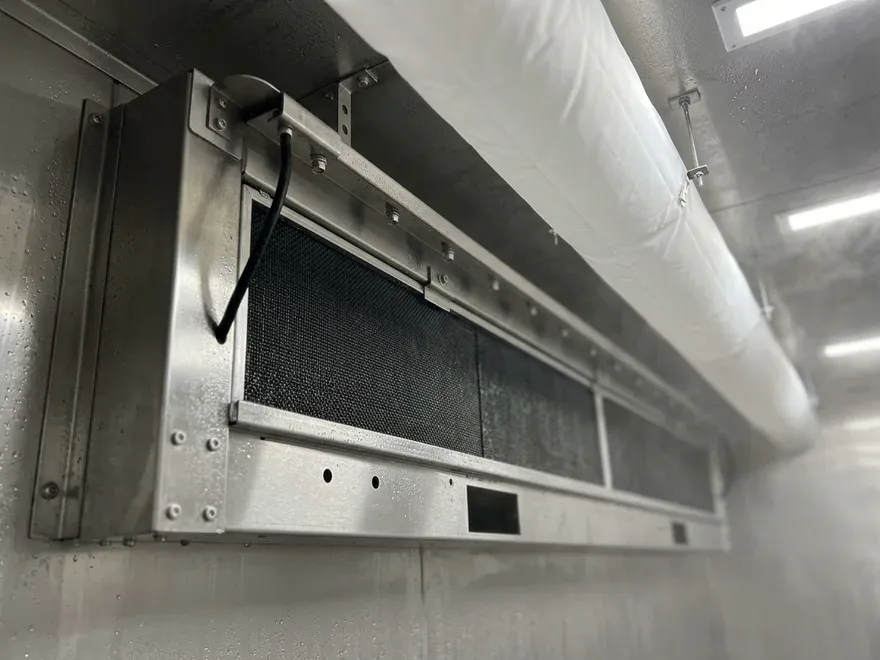
Self-cleaning spore filter
Oyster mushrooms shed a lot of spores, which clog air filters. The pod senses when its filter screen is blocking and cleans it automatically.
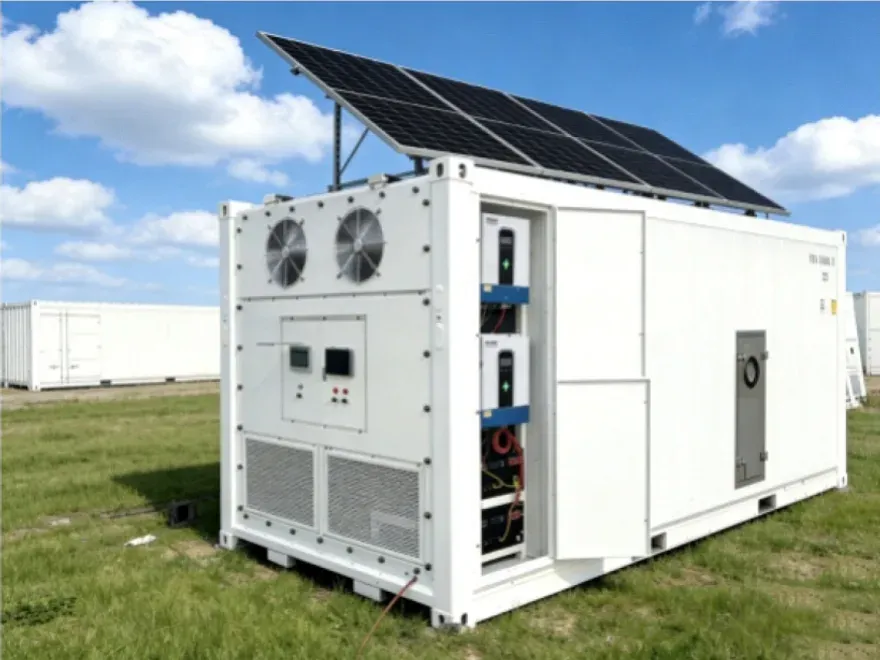
Solar-ready power
Solar panels and a battery bank can be fitted to the container roof, with grid or generator backup. On our own farm, pods run primarily on a 1-megawatt solar array with the grid as backup.
How a growing run works
The controller moves the room from one stage to the next on its own. A grower’s daily job is checking, picking and keeping things clean.
- 01
Load
Colonized grow bags go onto the racks.
- 02
Spawn run
Warm, dark and still while the mycelium fills the bag.
- 03
Pinning
The controller cools the room, raises humidity, brings in fresh air and turns on the lights.
- 04
Fruiting
Conditions are held at the variety’s setpoints while the mushrooms grow.
- 05
Harvest and clean
Pick by hand, then wash down the stainless walls and draining floor for the next run.
Controls
Check the room from anywhere.
Each pod has a touch-screen controller with high-precision sensors. The same readings and settings are on your phone.
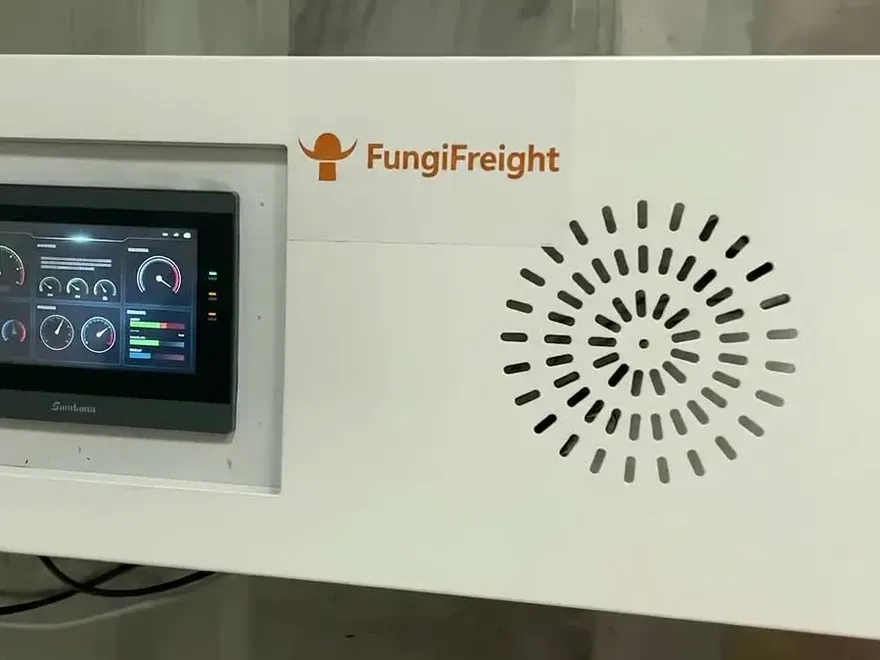
We are also building MycoMind, our own software for running pods. It is in development, and we will describe what it does once it ships.
- Set temperature, humidity and CO₂ for each stage
- Live readings of room temperature, humidity, CO₂ and substrate temperature
- Programs of up to 10 stages, with elapsed and remaining time for each
- Status of the fans, compressor and valves at a glance
- A fault log, so problems are recorded and easy to trace
- Remote monitoring and adjustment from a phone
Pilot pod specifications
| Container | 40 ft high-cube refrigerated container (9′6″ tall) |
|---|---|
| Insulation | Polyurethane walls, roof and doors, up to about 4 in (10 cm) |
| Interior | Stainless steel walls, T-section aluminum floor |
| Climate unit | 8 HP heat pump with DC inverter compressor, cools and heats |
| Cooling capacity | 20 kW (about 68,000 BTU/h) at 95°F outdoor |
| Heating capacity | 17.6 kW at 32°F outdoor; 15.2 kW at −4°F outdoor |
| Rated outdoor range | −22°F to 113°F (−30°C to 45°C) |
| Room air circulation | 2 × 4,000 m³/h (2 × about 2,350 CFM) |
| Fresh air | 4,200 m³/h (about 2,470 CFM) through a heat-recovery core |
| Humidifiers | 2 atomizers, 25 L/h each (about 6.6 gal/h each) |
| Wash-down pump | 8 L/min (about 2.1 gal/min) |
| Lighting | Two-color LED, switched by growth stage |
| Controls | Touch screen, up to 10 program stages, phone app, fault log |
| Racking | Steel mesh vertical racks, about 5,000 oyster grow bags |
| Power | Three-phase. US electrical service confirmed for each site |
These are equipment ratings for our pilot pod, not growing results. They may change as the pilot goes on. Rack counts depend on the variety and bag size.
Want to see a pod?
Ask us about the technology, or arrange to talk with the growers who run our pilot pod.